Tesla Wall Connector Installation in Hoppers Crossing
Completed in Hoppers Crossing, this residential EV charger installation included installation of a customer-supplied Tesla Wall Connector for a Tesla Model 3, with a dedicated three-phase EV charging circuit where suitable, required RCBO/RCD protection, charger setup, testing and Certificate of Electrical Safety.
Project Overview
This Hoppers Crossing installation was a residential Tesla Wall Connector install-only project for a homeowner preparing for regular home charging of a Tesla Model 3.
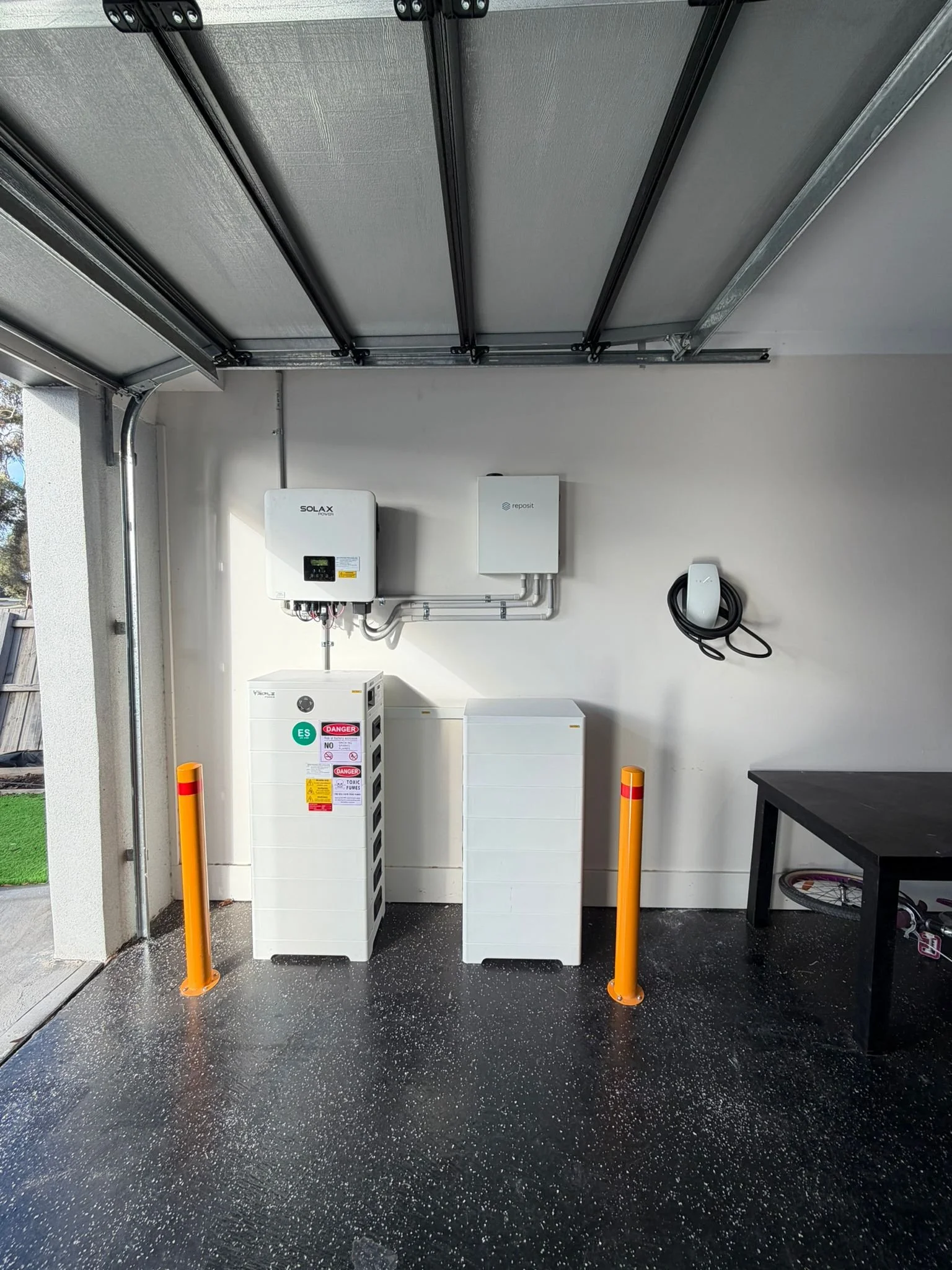
The customer already had the Tesla Wall Connector and wanted it installed on the battery-side garage wall. The property included solar and battery equipment, so the installation needed to be planned carefully around the existing garage sub-board, battery system, cable pathway and charger location.
Rather than treating the charger as a simple wall-mounted appliance, the correct approach was to install a dedicated EV charging circuit with the required protection, testing and certification.
Because EV charging places a continuous load on the electrical system, the installation needed to be completed with proper consideration of the switchboard, available capacity, circuit protection, earthing arrangement, charger location and existing solar/battery infrastructure.
Project Snapshot
Location: Hoppers Crossing, VIC
Property type: House
Vehicle: Tesla Model 3
Charger installed: Customer-supplied Tesla Wall Connector
Installation type: Residential EV charger install-only
Installation location: Battery-side garage wall
Supply type: Three-phase
Cable run: Approx. 5-10m garage run
Solar: Yes
Battery: Yes
Switchboard: Garage sub-board, with main power board on the left side of the house
Protection: Dedicated EV charging circuit with required RCBO/RCD protection
Outcome: Completed Tesla Wall Connector installation with setup, testing, verification and Certificate of Electrical Safety.
What the Client Needed
The client needed a dedicated home EV charging setup for a Tesla Model 3.
The preferred setup was a three-phase Tesla Wall Connector installation, subject to the vehicle’s onboard AC charging limit and the suitability of the existing electrical infrastructure.
The nominated charger location was on the garage wall near the battery system. The cable route was kept within the advised 5–10m range, with the installation planned from the existing garage sub-board to the nominated charger position.
Because the property had both solar and battery equipment installed, the EV charger needed to be installed as a dedicated EV charging circuit only, without altering the solar inverter, battery, backup circuit, EPS circuit or energy system configuration.
What We Installed
This project included:
Installation of customer-supplied Tesla Wall Connector
Dedicated three-phase EV charging circuit where suitable
Required RCBO/RCD protection for the EV charger circuit
Cable route from the existing garage sub-board to the nominated battery-side garage wall
Cable route through the garage area where suitable and accessible
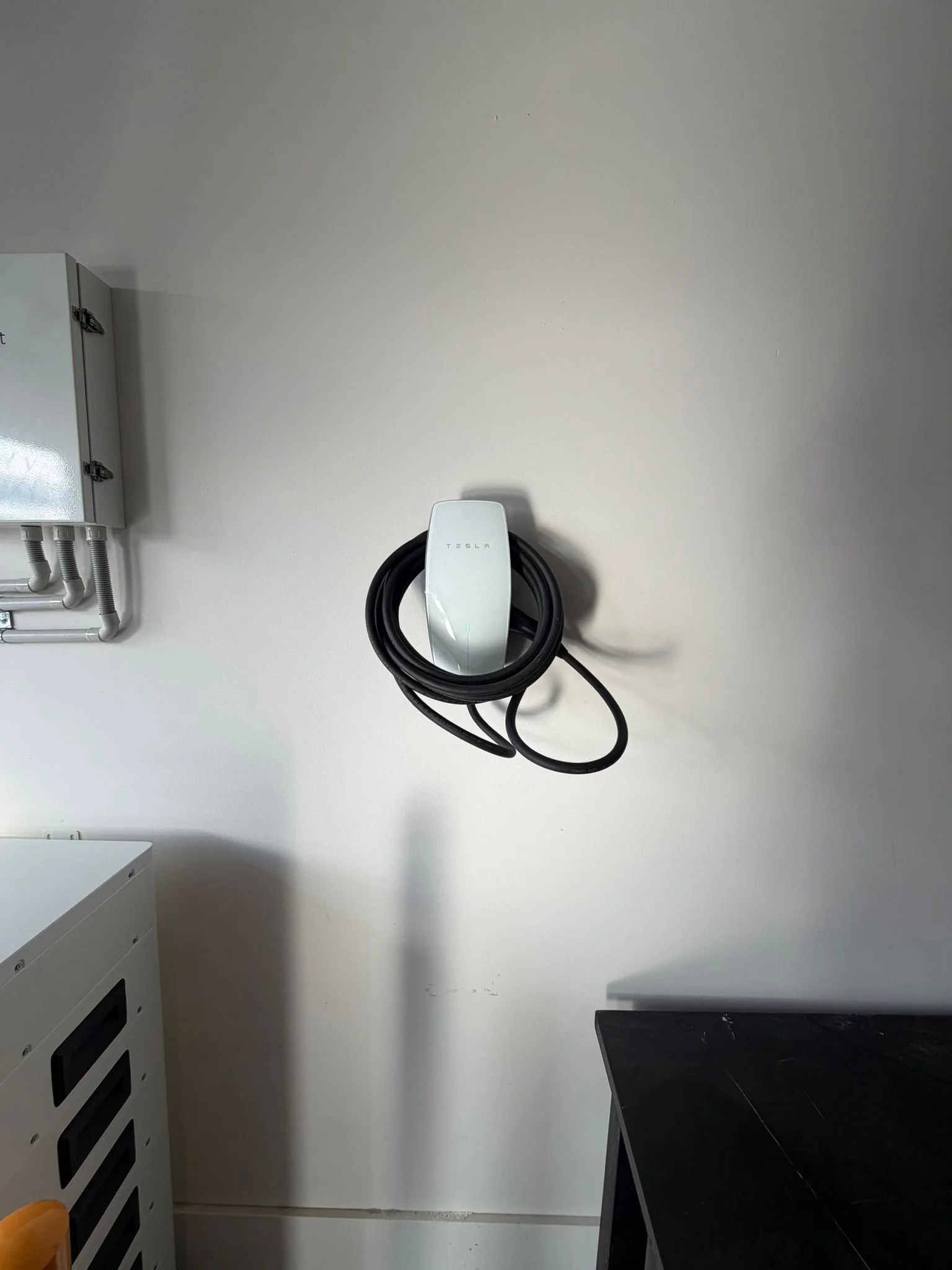
Charger mounting on the nominated garage wall location
Tesla Wall Connector setup and basic commissioning
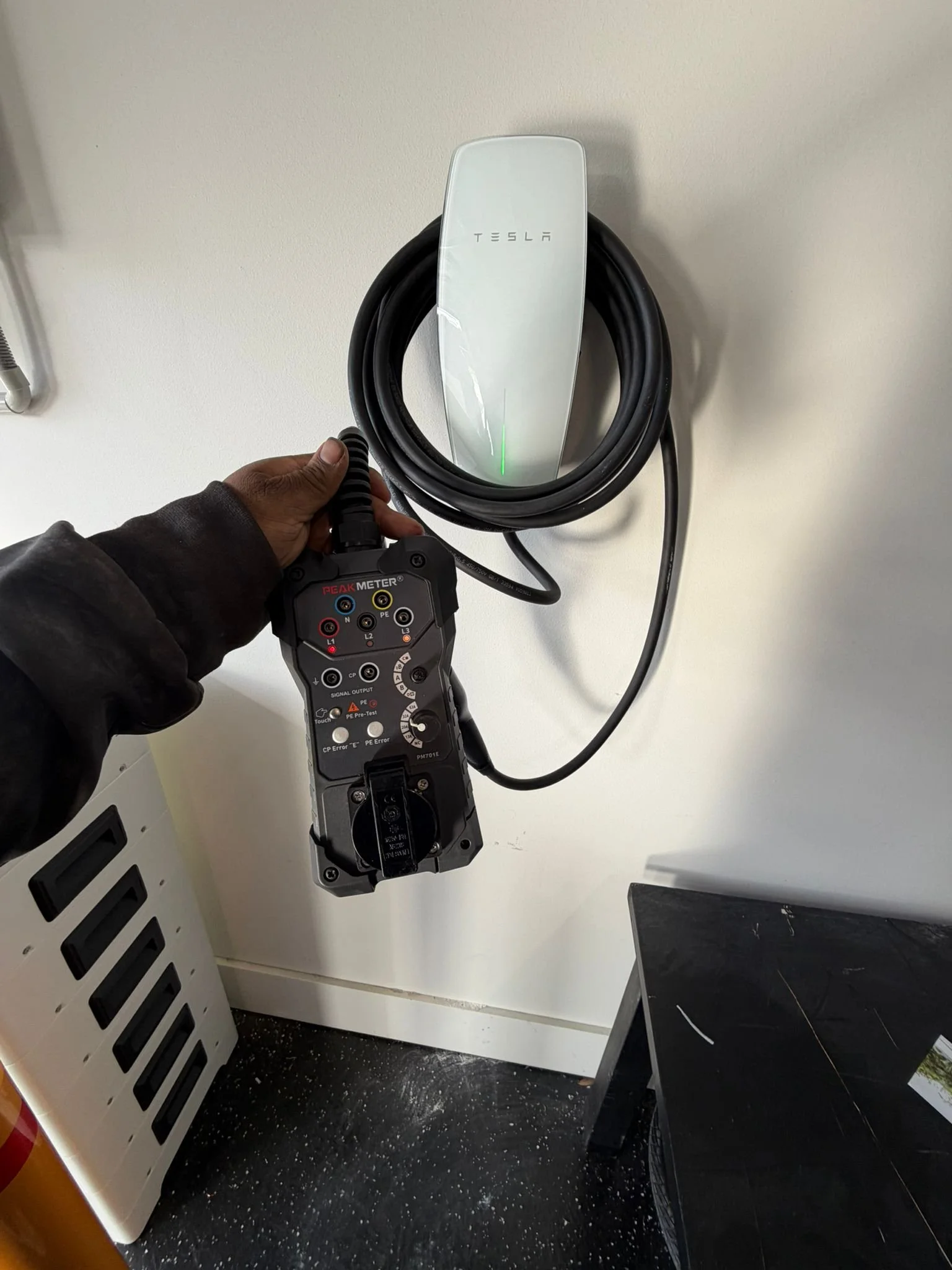
Testing and verification of the EV charging circuit
Certificate of Electrical Safety
The Tesla Wall Connector was installed as a dedicated home charging solution, giving the customer a clean and practical charging setup for regular Tesla charging at home.
Why This Setup Worked Well
This setup worked well because the charger location was positioned within a practical garage cable route from the existing garage sub-board.
The Tesla Wall Connector is a strong option for Tesla owners who want a clean, dedicated and convenient home charging setup. For a Tesla Model 3, a properly installed wall connector is a better long-term solution than relying on a standard power outlet for regular charging.
The three-phase supply also allowed the installation to be configured around the available electrical infrastructure, while still recognising that the vehicle’s onboard AC charger determines the maximum AC charging rate the car can accept.
This is an important point for EV owners. A charger may be capable of higher output, but the actual charging speed is limited by the vehicle, the electrical supply, the charger configuration and the installation conditions.
Solar, Battery and Switchboard Considerations
This property included solar and battery equipment, so the existing electrical setup needed to be checked carefully before proceeding.
For this installation, the EV charger was installed as a dedicated EV charging circuit. Any solar inverter, battery, backup circuit, EPS circuit or energy system reconfiguration was excluded unless separately assessed and quoted.
The existing garage sub-board was used as part of the installation pathway, subject to suitability, available capacity and space for the required EV circuit protection.
This is why EV charger installation should not be treated as a basic plug-in job. The switchboard, protection, supply type, solar/battery arrangement and cable pathway all need to be considered before installation.
Testing and Commissioning
After installation, the EV charging circuit was tested and verified before handover.
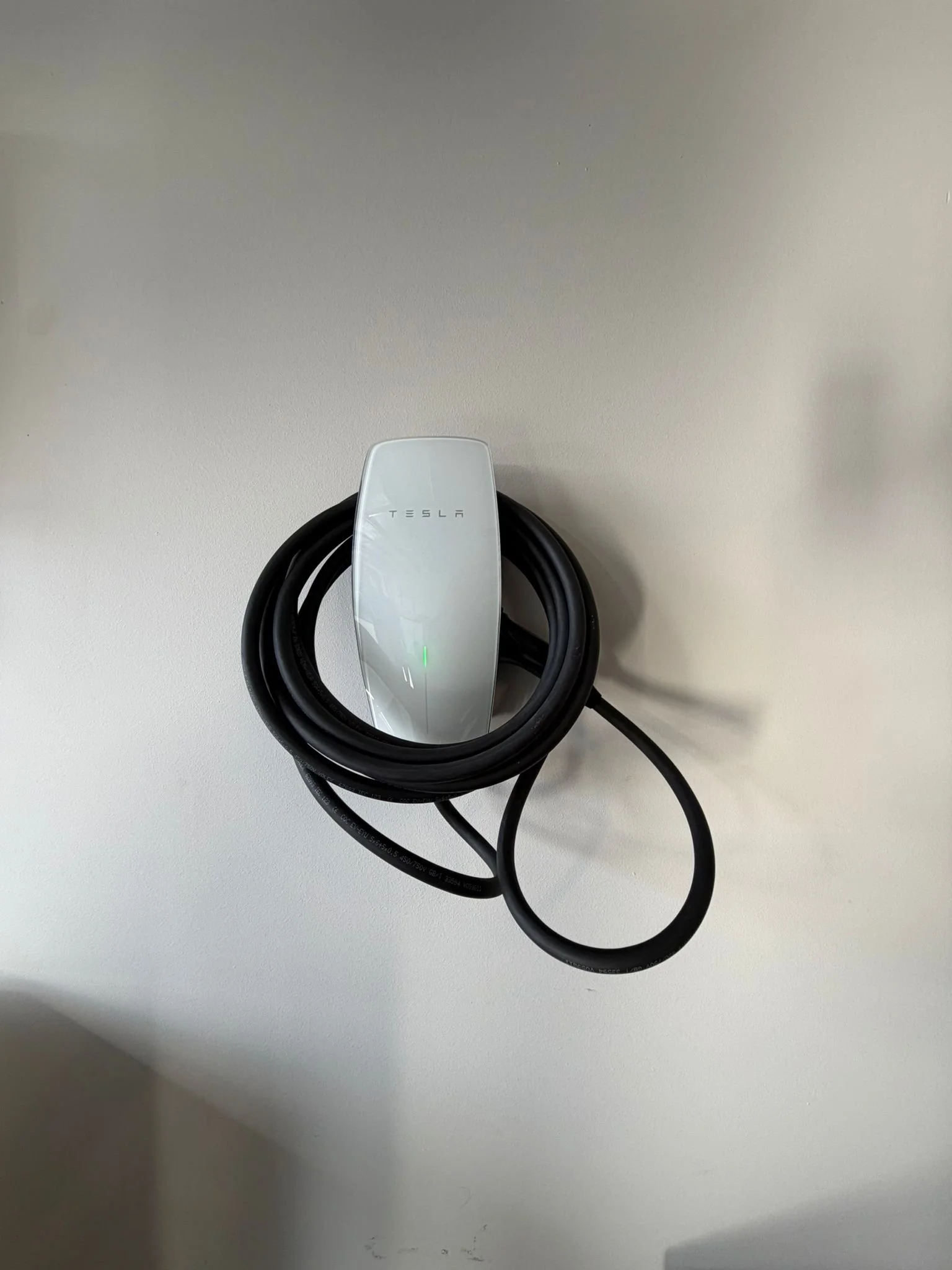
The Tesla Wall Connector was mounted neatly on the nominated garage wall, set up for use, and installed with the required circuit protection and Certificate of Electrical Safety.
Testing and verification are a critical part of any EV charger installation. A wall charger should not just be mounted and connected without confirming the circuit, protection, earthing and overall installation suitability.
The Outcome
The finished result was a clean Tesla Wall Connector installation in Hoppers Crossing, giving the client a dedicated home charging setup for their Tesla Model 3.
The charger was installed on the nominated battery-side garage wall, connected via a dedicated EV charging circuit, protected with the required RCBO/RCD arrangement, and completed with testing, commissioning and Certificate of Electrical Safety.
The customer now has a proper Tesla home charging solution designed for regular everyday charging.
Need EV Charger Installation in Melbourne?
Planning to install a Tesla Wall Connector at home? The right setup depends on your switchboard, cable route, charger location, available electrical capacity, supply type, solar or battery system, and how you plan to charge your vehicle.
Aether Installations helps Melbourne homeowners install compliant, future-ready EV charging systems with clear scope, licensed electricians and Certificate of Electrical Safety.
Request an EV charger installation quote today.