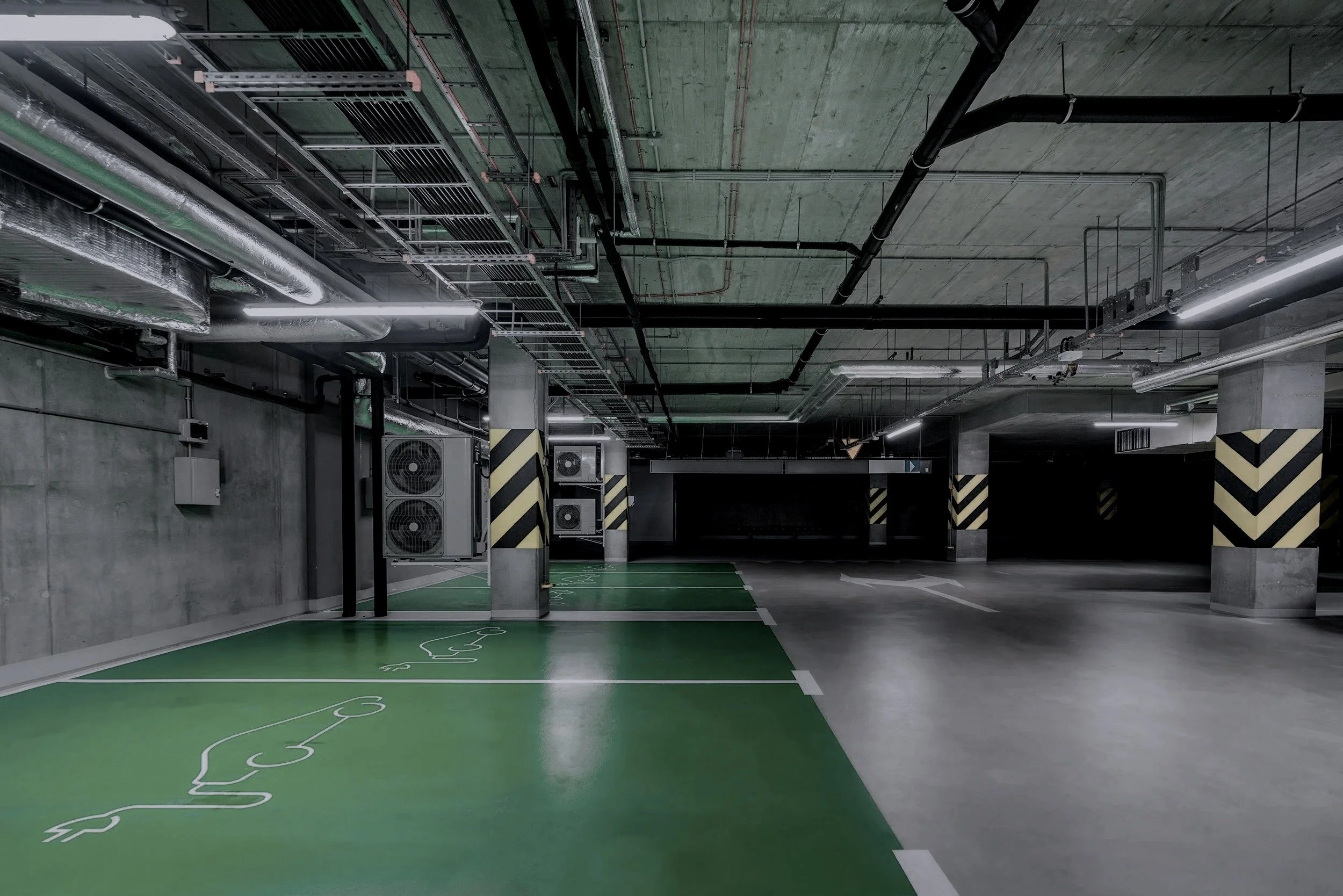
Strata EV Charging Melbourne
EV charging infrastructure for apartment buildings, body corporates & shared car parks designed for long-term scalability.
Without a structured plan, strata EV charging quickly becomes inconsistent, capacity-constrained and expensive to retrofit later.
Aether Installations supports strata EV charging projects across Victoria and New South Wales, including apartment EV readiness assessments, staged rollout planning and infrastructure pathway recommendations.
Strata EV readiness & infrastructure
Licensed electricians
AS/NZS 3000 compliant
Melbourne-based
Supporting Victoria & NSW
Why EV Charging is Difficult in Apartments
Installing EV chargers in apartment buildings is fundamentally different from a standard home installation.
Most strata properties were never designed for multiple EV chargers, which creates real electrical, approval & infrastructure challenges.
4 Problem Blocks:
1. Shared Electrical Supply
Most apartment buildings rely on shared electrical infrastructure, so multiple residents are drawing from the same system.
2. Limited Capacity
Existing switchboards and distribution systems often cannot support multiple EV chargers without upgrades or load management.
3. Approvals & Strata Requirements
EV charging usually requires approval from owners corporations or body corporates, adding another layer of process and decision-making.
4. Retrofitting Challenges
Running cabling through basements, risers, car parks and existing structures requires careful planning to avoid messy, costly outcomes.


Government-Backed Momentum for Apartment EV Charging
Apartment EV charging is becoming a recognised infrastructure priority across Australia.
The Australian Renewable Energy Agency (ARENA) has supported apartment EV charging projects focused on reducing the cost and complexity of EV charging in strata buildings.
These projects highlight the same issue many buildings are now facing: apartment EV charging is not just about installing individual chargers. It requires planning around building capacity, shared electrical infrastructure, metering, load management, approvals and long-term resident demand.
For owners corporations, strata managers and building committees, the lesson is clear: waiting until multiple residents request chargers can lead to reactive, inconsistent and expensive outcomes.
Aether Installations helps Melbourne strata buildings take a structured approach through EV readiness assessments, infrastructure planning and compliant installation pathways.
Aether Installations is not affiliated with ARENA or ReadySteadyPlug.
We reference these developments as part of the broader Australian EV infrastructure conversation.
Who We Work With
Strata EV charging affects multiple stakeholders.
We work with the people responsible for approvals, infrastructure planning, site access & long-term building outcomes.
🏢 Owners Corporations
We help owners corporations understand what is technically possible, what the building can support, and how to avoid short-term decisions that create long-term limitations.
🧾 Strata Managers
We give strata managers practical guidance, clear recommendations and structured next steps they can take back to committees and residents.
🏬 Body Corporates
We help body corporates assess building constraints, plan scalable infrastructure and make informed decisions around EV charging upgrades.
🏢 Building Managers & Developers
We support site logistics, access planning, infrastructure layout and future-ready EV charging integration for both existing buildings and new developments.
Whether the building is responding to one resident request or planning a broader EV pathway, the priority is defining the right infrastructure approach before reactive decisions create larger problems.
Why One-Off Charger Approvals Become a Bigger Building Problem
Approving EV chargers one request at a time might seem practical at first, but this reactive approach usually creates bigger infrastructure problems later.
Without a clear infrastructure plan, EV charging in strata buildings quickly becomes inconsistent, inefficient and expensive to manage.
Inconsistent installation standards
Different electricians and different methods create inconsistency across the building.
Electrical infrastructure strain
Multiple chargers added without planning can overload shared systems or expose capacity limitations.
Duplicated upgrade costs
Repeated one-off upgrades often cost more than a planned building-wide approach.
No long-term scalability
Buildings become unprepared as EV adoption increases, leading to more disruption & more retrofit cost later.
What starts as a simple resident request can quickly become an infrastructure problem unless the building plans properly from the start.
One-Off Resident Install
Best for:
Simple buildings
Low current EV demand
Clear cable pathway
Sufficient spare electrical capacity
Risks:
Inconsistent installation methods
Repeated approval requests
Future capacity problems
Duplicated infrastructure costs
No clear long-term charging pathway
Harder to maintain consistency as more residents install chargers
Can create disputes over fairness, access, and who pays for future upgrades
Building-Wide EV Strategy
Best for:
Apartments and strata buildings
Multiple current or future EV owners
Shared basement or car park areas
Limited electrical capacity
Buildings wanting a scalable pathway
Benefits:
Planned infrastructure
Load management
Cleaner approval process
Scalable resident charger rollout
Better long-term cost control
More confidence for committees and owners corporations
Not sure which pathway suits your building?
Start with a Strata EV Readiness Assessment.
Our Approach
We do not treat strata EV charging as a series of one-off installs.
We assess the building, understand the constraints, and design an infrastructure path that works now and can scale later.
Our approach includes:
Electrical capacity assessment
We assess what the building’s existing electrical infrastructure can safely support.
Infrastructure planning
We design a pathway for the building, not just the next resident request.
Scalable system design
The system is planned to support increasing EV demand without constant redesign.
Load management strategies
Demand is balanced intelligently so the building is protected from unnecessary strain.
Compliant installation & certification
Installations are completed by our licensed electricians and aligned with AS/NZS 3000.
The outcome is a structured EV charging system that supports multiple users, reduces long-term upgrade waste and prepares the building for future demand.
Recommended 3-Stage EV Charging Rollout for Apartments
Stage 1 - Strata EV Readiness Assessment
A comprehensive assessment of your building’s electrical capacity, infrastructure, and future EV demand.
Includes:
• Switchboard and capacity review
• Car park layout assessment
• Infrastructure pathway planning
• Future demand considerations
Outcome:
This gives the owners corporation or committee a practical basis for deciding whether to approve individual chargers, plan shared infrastructure, or prepare a staged building-wide rollout.
Stage 2 - Shared EV Infrastructure
Installation of core electrical infrastructure to support multiple EV chargers across the building.
Includes:
• Common electrical distribution systems
• Cable containment pathways
• Load management systems
• Provision for staged expansion
Outcome:
A scalable, future-ready EV charging backbone that supports multiple residents without overloading the system.
Stage 3 - Resident Charger Installations
Installation of individual EV chargers within the approved infrastructure system.
Includes:
• Dedicated circuits
• Smart charger installation
• Integration with shared infrastructure
• Certificate of Electrical Safety
Outcome:
Efficient, compliant EV charger installations for residents - delivered within a structured, scalable system.
The first step in any strata EV charging project is understanding the building’s electrical capacity, infrastructure constraints and likely EV demand. Submit your details below and we’ll provide clear next steps.
Key Benefits of a Structured Strata EV Charging Approach
A structured EV charging strategy does more than solve today’s installation request.
Prevents unplanned and inconsistent charger installations
Reduces repeated upgrade costs over time
Protects shared electrical infrastructure
Supports scalable growth in resident EV charging
Improves clarity for committees and building stakeholders
Makes future resident charger installations faster and more efficient
Service Options
Our services are designed to support strata buildings at every stage of EV charging adoption, from initial assessment & planning through to shared infrastructure rollout & individual resident charger installs.
EV Readiness Assessment
Suitable for strata managers, owners corporations and committees seeking clarity before approving EV charging installations.
Includes:
Site inspection and assessment of building conditions
Electrical capacity analysis and switchboard review
Car park and charger location review
Cable pathway and access considerations
Single resident vs building-wide charging pathway review
Load management considerations
Future demand & scalability planning
Written summary with clear recommendations and next steps
Outcome:
A clear understanding of the building’s current capability and a structured pathway for EV charging implementation.
Indicative fee:
From $1,150 inc GST
Strata EV Infrastructure
Design and installation of shared EV charging infrastructure to support scalable, long-term EV adoption across the building.
Includes:
Shared electrical distribution and supply infrastructure
Cable containment and pathway installation
Load management and protection systems
Infrastructure designed for staged expansion
Integration framework for future resident chargers
Outcome:
A compliant, future-ready infrastructure system that supports multiple EV chargers while helping reduce duplication, approval complexity and long-term upgrade costs.
Pricing:
Project-specific quotation
Resident Charger Installations
Supply and installation of EV chargers for individual residents within an approved building infrastructure system.
Includes:
Charger supply and professional installation
Dedicated circuit from approved distribution point
Integration with shared building infrastructure
Testing, commissioning and charger setup
Certificate of Electrical Safety
Outcome:
A safe, compliant and fully operational EV charging solution tailored to the resident’s parking space and integrated with the building’s approved infrastructure.
Pricing:
Dependent on site conditions and installation requirements
Why Strata EV Charging Needs Proper Planning
Strata EV charging is more complex than standard residential installation.
Long cable runs, shared infrastructure, limited capacity, access constraints & stakeholder approvals all need to be considered properly before installation.
Without a structured approach, these projects often lead to delays, avoidable cost and infrastructure limitations later.
Frequently Asked Questions
Common questions about EV charging in strata buildings, including approvals, capacity, staged rollout and how to start planning properly.
Because every building is different, the answers below are general guidance.
A proper assessment is the best way to understand what’s possible for your building.
-
Yes - however, EV charging in apartment buildings requires proper planning and infrastructure design.
Unlike standalone homes, strata buildings operate on shared electrical systems. This means installations must consider overall building capacity, load distribution, and future demand.
A structured approach ensures chargers can be installed safely, compliantly, and without overloading the building’s electrical system.
-
This depends on the building and the chosen solution.
In most cases:
Individual residents pay for their own charger installation
Shared infrastructure (if implemented) may be funded by the Owners Corporation or staged over time
We help buildings design fair, scalable solutions where costs can be allocated appropriately.
-
Not always - but many do.
Some buildings have sufficient spare capacity, while others require:
switchboard upgrades
load management systems
shared infrastructure
The only way to determine this is through an EV readiness assessment.
-
They can - but this is not always the best long-term approach.
Case-by-case installations often lead to:
inconsistent standards
duplicated costs
infrastructure strain
A structured system ensures all future installations are integrated properly.
-
Load management systems control how electricity is distributed across multiple EV chargers.
This allows:
multiple chargers to operate safely
existing infrastructure to be used more efficiently
upgrades to be deferred or reduced
It is a key component of scalable EV charging in strata buildings.
-
It depends on the size and complexity of the building.
Typical timelines:
Assessment: 1-2 weeks
Design and planning: 2-4 weeks
Installation: varies depending on scope
We provide clear timelines after the initial assessment.
-
The first step is an EV readiness assessment.
This includes:
reviewing electrical capacity
assessing infrastructure pathways
identifying upgrade requirements
providing a clear roadmap for implementation
This ensures the building makes informed decisions before any installation begins.
-
Yes - and this is the recommended approach.
A staged rollout allows:
infrastructure to be installed first
chargers to be added as demand grows
costs to be spread over time
This ensures the system remains scalable and cost-effective.
-
New developments are increasingly being designed with EV charging in mind.
For existing buildings, upgrading infrastructure early helps:
future-proof the property
avoid higher retrofit costs later
support increasing EV adoption
-
Start with a strata EV assessment.
We review your building, identify what’s possible, and provide clear recommendations on the best approach.
🗲 From there, we guide you through design, planning, and installation.
Start with a Structured Strata EV Assessment
Before approving individual EV charger requests, understand what your building can safely support.
A Strata EV Readiness Assessment helps owners corporations, strata managers and building committees understand the right pathway before committing to individual chargers, shared infrastructure or wider electrical upgrades.
Assessment includes:
Switchboard and capacity review
Car park and cable pathway review
Resident charging demand considerations
Load management requirements
Staged rollout recommendations
Written next-step summary for committee discussion
Indicative fee: From $1,150 inc GST
Why Aether Installations
Strata EV charging needs more than a standard charger install.
It requires infrastructure thinking, practical building assessment and a pathway that supports future demand properly.
Melbourne-based, supporting Victoria & NSW
Focused exclusively on EV charging across residential, strata and commercial projects
Installations completed by our licensed electricians
AS/NZS 3000 compliant delivery
Designed for long-term scalability across shared buildings
For council-led or shared infrastructure, see Government EV Charging Projects
Whether the building is planning for future EV demand or responding to current installation requests, the right result depends on getting the infrastructure pathway right from the start.